
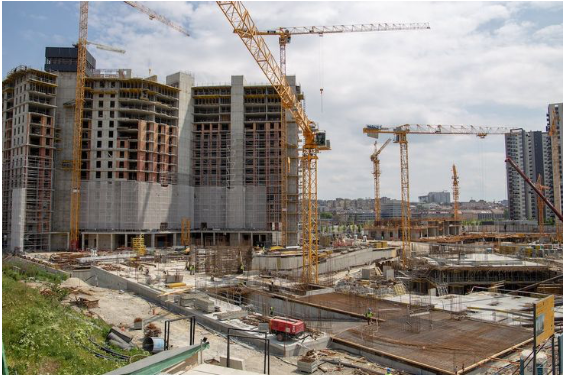
Constructing large-scale residential buildings comes with a unique set of challenges. From coordinating multiple teams to ensuring safety on site, every aspect demands careful planning. Temporary structures like scaffolding, protective barriers, and access platforms play a vital role in keeping projects on schedule and workers secure. These structures are not just support—they are the backbone of modern construction management.
Efficient Planning For Multi Family Dwelling Projects
A multi family dwelling refers to a residential building designed to house several separate families under one roof. Managing such projects requires meticulous planning. Architects, engineers, and contractors must align their schedules to avoid delays. Temporary structures, including scaffolding and hoists, help teams access hard-to-reach areas safely. By integrating these supports early in the plan, construction teams can streamline workflow and reduce unexpected interruptions, ensuring the multi family dwelling progresses smoothly.
Scaffolding Services And Their Role In Safety
Scaffolding services provide temporary platforms that allow workers to perform tasks at height with stability. Safety is paramount when dealing with large residential constructions. High-rise multi family dwellings depend on scaffolding for exterior work, painting, and installation. Professional scaffolding services assess load requirements and local regulations to create reliable structures. This reduces risk, improves efficiency, and ensures compliance with safety standards, making scaffolding services an essential part of every project.
Temporary Structures For Material Handling In Multi Family Dwellings
Large-scale residential projects involve moving heavy materials quickly and safely. Temporary cranes, lifts, and scaffolding platforms help teams transport bricks, beams, and panels without slowing progress. In multi family dwellings, where space can be tight and multiple floors are under construction simultaneously, temporary structures provide organized pathways and secure storage points. Efficient material handling is directly linked to fewer accidents and timely completion of multi family dwelling projects.
Integrating Scaffolding Services With Project Scheduling
Time management is critical in large residential builds. Scaffolding services do more than support workers—they influence project timelines. Temporary platforms can be installed in stages, allowing different teams to work concurrently. This layered approach keeps the construction site organized, reduces downtime, and improves communication between crews. Coordinating scaffolding with the overall schedule ensures that resources are used effectively, highlighting the importance of scaffolding services in successful multi family dwelling construction.
Innovative Temporary Structures For Modern Residential Construction
Modern construction increasingly relies on flexible temporary structures. Modular scaffolding, adjustable platforms, and weather-resistant shelters enable projects to adapt to changing site conditions. For multi family dwellings, these innovations allow work to continue safely in tight urban spaces or adverse weather. Temporary structures not only protect workers but also maintain the quality of materials and finishes, demonstrating their strategic value beyond simple support.
Conclusion
Managing large-scale residential construction is complex, but temporary structures make it feasible and safe. From scaffolding services to modular platforms, these supports allow teams to access every corner of a building, handle materials efficiently, and maintain project timelines. Multi family dwelling projects, in particular, benefit from careful planning and integration of temporary structures. With the right approach, safety, efficiency, and quality are no longer competing priorities—they work together to bring ambitious residential projects to life.