
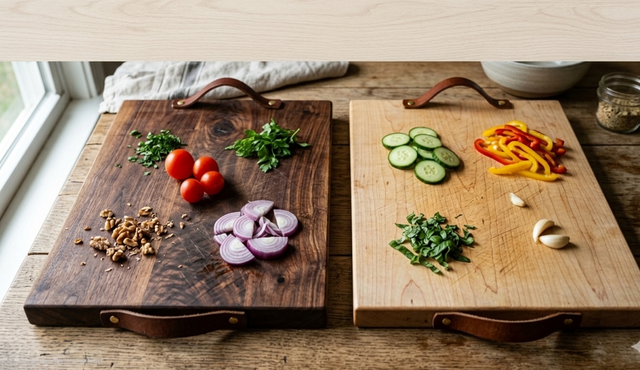
As more consumers invest in long-lasting kitchen tools instead of disposable products, solid wood cutting boards continue to see strong demand. Among the many hardwood options available today, maple remains one of the most widely recommended materials by woodworkers, chefs, and culinary professionals.
While walnut, cherry, oak, and other hardwoods each have their advantages, maple has earned its reputation through decades of dependable performance in both commercial and residential kitchens.
A Balance of Durability and Knife Friendliness
One of maple’s biggest strengths is its balance.
It is hard enough to resist excessive wear while remaining gentle enough on quality kitchen knives. Unlike extremely hard materials that can dull blades more quickly, maple provides a forgiving cutting surface that helps preserve knife edges during everyday meal preparation.
This balance has made maple a preferred material in restaurants, culinary schools, and home kitchens alike.
Tight Grain Helps With Everyday Maintenance
Hard maple features a naturally tight grain structure that creates a smooth, consistent cutting surface.
This offers several practical benefits:
- Easier day-to-day cleaning
- Reduced absorption of moisture compared to more porous woods
- A smooth feel during food preparation
- Excellent appearance even after years of regular use
Like any solid wood product, proper maintenance remains important. Washing by hand, drying immediately, and periodically applying food-grade mineral oil and board wax can significantly extend the life of a maple cutting board.
Built for Daily Food Preparation
Many homeowners use the same cutting board for nearly every meal.
Maple performs well for:
- Vegetable preparation
- Fruit slicing
- Sandwich making
- Bread cutting
- General meal prep
- Everyday family cooking
Rather than requiring different boards for every task, many cooks simply clean the board thoroughly between food types while enjoying the durability that maple provides.
Sustainable Products That Last
Another reason maple continues to grow in popularity is longevity.
A well-built hardwood cutting board can remain in service for many years with only routine care. Small knife marks naturally blend into the surface over time, and occasional oiling helps restore moisture that everyday washing removes.
For consumers looking to reduce disposable kitchen products, investing in a handcrafted hardwood cutting board often results in fewer replacements over its lifetime.
Handmade Construction Makes a Difference
Not all maple cutting boards are built the same.
Construction methods, wood selection, sanding quality, and finishing techniques all contribute to the finished product.
At Woods & Wax, every board is individually crafted from solid hardwood, carefully sanded through multiple grits, then finished with multiple applications of food-grade mineral oil before receiving a protective blend of beeswax and conditioning oils. This finishing process allows the wood to fully absorb oil before the protective wax is applied, helping provide long-lasting moisture resistance.
The result is a board that arrives ready to use while maintaining the natural beauty that has made maple one of North America’s most trusted hardwoods.
Consumers interested in learning more about selecting the right board can explore the Woods & Wax guide to the best wood for a cutting board:
Homeowners wanting to maximize the lifespan of their investment can also review the company’s complete cutting board care guide:
Additional information about handcrafted hardwood cutting boards is available at: https://woodsandwax.com/