
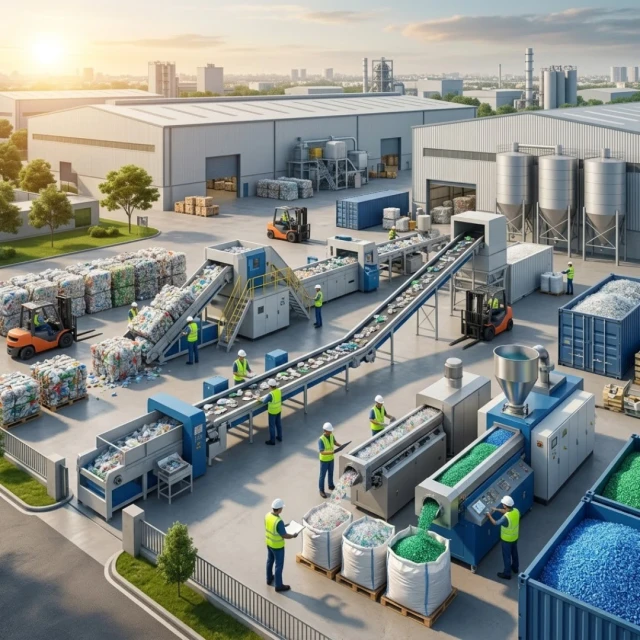
For decades, industrial plastic scrap was viewed as an unavoidable cost of manufacturing. Today, that mindset is changing.
Rising material costs, increased sustainability goals, and pressure to improve operational efficiency have encouraged manufacturers to treat recyclable plastic as a recoverable asset instead of waste. Companies that establish structured recycling programs are finding they can reduce disposal costs, recover value from production scrap, and strengthen their supply chains at the same time.
Manufacturing Generates More Recyclable Plastic Than Many Companies Realize
Industrial facilities produce significant quantities of clean post-industrial plastic every day. Unlike post-consumer plastics collected from households, manufacturing scrap is often generated in controlled environments, making it cleaner, easier to sort, and more valuable for recycling.
Common recyclable materials include:
- HDPE
- Polypropylene (PP)
- PET
- LDPE and LLDPE film
- ABS
- Polycarbonate
- Nylon
- Acrylic (PMMA)
- TPO and other engineering plastics
These materials are frequently produced during normal manufacturing operations through startup purge, runners, sprues, trim, rejected parts, excess inventory, obsolete products, or production changeovers.
Rather than paying to landfill these materials, many manufacturers now work with industrial recycling partners that purchase truckload quantities for reprocessing into reusable resin.
Clean Separation Creates Higher Value
One of the biggest factors affecting scrap value isn’t simply the plastic type—it’s how the material is handled before pickup.
Facilities that separate plastics by resin type, color, and contamination level typically receive stronger offers than operations that combine everything into mixed loads.
Simple improvements can significantly increase recoverable value:
- Store materials indoors whenever possible.
- Keep different resin types separated.
- Prevent contamination from metal, wood, labels, and liquids.
- Separate natural material from colored material.
- Maintain consistent packaging using Gaylords, pallets, or baled material.
Small operational changes often create measurable financial returns over time.
Circular Manufacturing Is Becoming Standard Practice
Manufacturers are increasingly adopting circular manufacturing strategies that reduce waste while improving resource utilization.
Instead of disposing of valuable plastic, companies are:
- Selling excess production scrap.
- Reintroducing recycled resin into approved manufacturing processes.
- Partnering with industrial recyclers for scheduled pickups.
- Tracking recycling metrics alongside production KPIs.
These programs not only reduce waste but also improve ESG reporting and demonstrate responsible material management to customers and suppliers.
Recycling Partnerships Reduce Operational Burden
Many manufacturers assume industrial recycling requires additional labor or complicated logistics.
In reality, experienced recycling partners typically coordinate transportation, pickup scheduling, material evaluations, and ongoing purchasing agreements.
This allows production teams to remain focused on manufacturing while converting accumulated scrap into revenue instead of disposal expense.
Companies generating consistent volumes often benefit from long-term recycling relationships that simplify inventory management and reduce warehouse congestion.
Looking Beyond Today’s Scrap
Industrial plastic recycling continues to evolve alongside manufacturing technology.
As recycled resin quality improves and demand increases across multiple industries, more manufacturers are recognizing that plastic scrap represents inventory with measurable value—not simply waste requiring disposal.
Organizations that establish organized recycling systems today are positioning themselves for improved efficiency, stronger sustainability initiatives, and greater resilience against future material cost fluctuations.
Manufacturers interested in understanding what materials have value can review Seraphim Plastics’ guide to Types of Recyclable Plastics:
Companies looking to understand current market conditions can also reference the company’s resource explaining Plastic Scrap Pricing vs. Virgin Resin Cost:
Businesses that generate consistent volumes of industrial scrap can learn more about Seraphim Plastics’ industrial plastic recycling services at:https://www.seraphimplastics.com/