
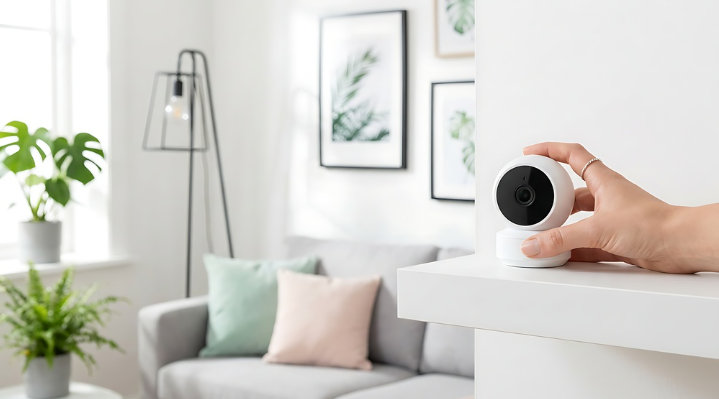
Homeowners basically have two choices when it comes to home security installation: DIY or a professional installation. What so many do not know is that installation is often more important than the actual devices purchased with a system. Why? Because placement is so critical to each device’s effectiveness.
The physical positioning of sensors, cameras, and other devices makes the difference between a fail-safe defensive shield and a system rife with blind spots. DIY installation is simple enough if you know what you are doing. But if you don’t, you’re most likely to place devices based on aesthetic appeal. Professional installation takes a very different approach. Placement is based on maximizing performance.
Vivint Home Security offers free professional installation on most of its systems. This includes their new HomeProtect package, an entry-level package designed around affordability. They insist on professional installation because they know it is far superior to a DIY job.
The Physics of Detection
The pros know things that most homeowners do not. For example, pros understand the physics of detection. Where most homeowners assume that a motion sensor can be placed on any wall and at any position in a room, professional technicians know otherwise.
Motion detectors are sensitive to heat signatures moving across their fields of view. Yet they are not very sensitive to objects moving directly toward them. Based on this reality, a pro knows that installing a motion sensor flat against a wall at the end of a long hallway is a waste of time. In the corner, or slightly angled on the end wall, is better. An intruder will have to break the plane of the sensor’s field of view to walk the hall.
Placing Glass-Break Sensors
Placing glass-break sensors correctly requires similar knowledge. A glass-break sensor detects intrusion by listening for the sound profile shattered glass is known for. But if a sensor is placed too close to the edge of a window, where curtains can get in the way, the sound profile can be muffled and altered. Then the sensor may not pick up the intrusion.
Technicians Understand Shadow Zones
Professional technicians also have a leg up on homeowners because they understand the concept of ‘shadow zones’. Shadow zones refer to areas that are less-than-ideal for camera placement. For example:
- Facing Windows – Interior cameras should never be placed in a position that has them facing directly toward windows. Why? Because daytime backlighting will render high-definition facial recognition impossible.
- Placement at Height – Exterior cameras should be placed at a height that keeps them out of the reach of intruders while still allowing them to be easily seen. At the same time, they should not intrude into a neighbor’s yard.
- Outdoor Interference – Professional technicians pay close attention to things that could interfere with exterior cameras. For example, a tree that is not an issue during the winter could block a camera’s view once summer leaves arrive.
Professional installation is a better option because technicians know what to look for. They know how to best utilize the customer’s devices within the constraints of the property itself. They have the knowledge to avoid most of the mistakes DIY homeowners usually make.
Extending Installation to Home Automation
Given that the line between home security and home automation is virtually nonexistent at this point, it is reasonable to extend the benefits of professional installation to home automation devices. Professional technicians understand the best placement for smart thermostats, smart home hubs, mesh routers, and smart speakers. Why not take advantage of their training and experience? With some systems, like Vivint HomeProtect, professional installation is free.